About The Great Island Foundation
Our Story
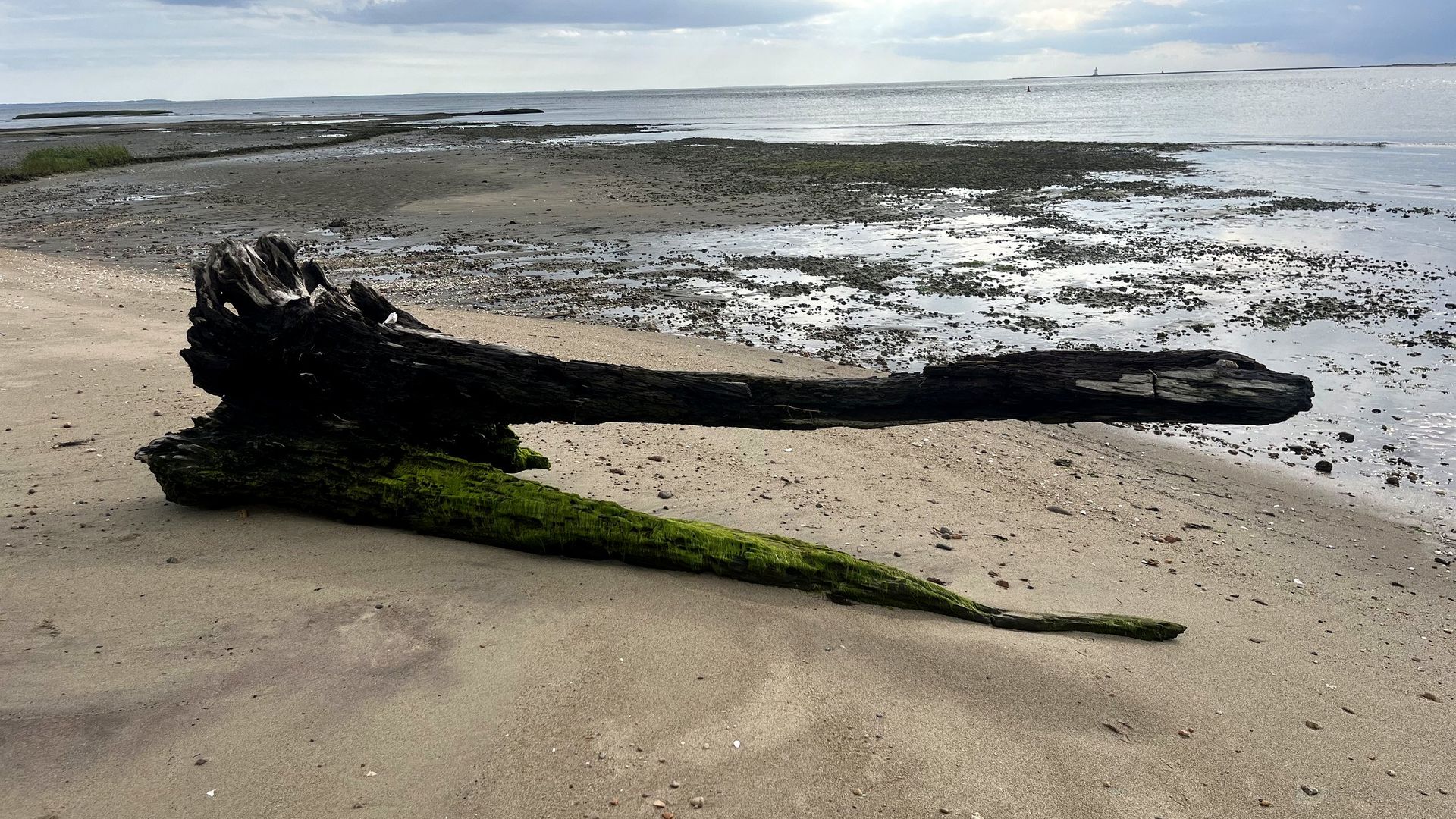
Great Island sits at the mouth of the Connecticut River, where the largest river in New England meets Long Island Sound. It is a sandy, windswept, tidal island, part of a delta system that has been recognized internationally for its ecological importance. The marshes, mudflats, and shallow waters surrounding the island support hundreds of species of birds, fish, and invertebrates. The Connecticut River estuary was designated a Wetland of International Importance under the Ramsar Convention and, in 2022, became the Connecticut National Estuarine Research Reserve.
The Great Island Foundation was incorporated in 2022 by a group of Old Lyme natives who share a deep, lifelong connection to this landscape. We grew up fishing these creeks, sailing these channels, and walking these marshes. Over the years, we watched the water grow cloudier, the eelgrass thin out, and the shellfish beds decline. We started the Foundation because we believe the people who know a place best are the ones who should help take care of it.
We believe the people who know a place best are the ones who should help take care of it.
We are a 501(c)(3) nonprofit with no paid staff. Our board and team members bring backgrounds in engineering, law, medicine, ecology, business, diplomacy, education, and journalism. What connects us is that we all call the mouth of the Connecticut River home.
What We Do
Shellfish Habitat Restoration
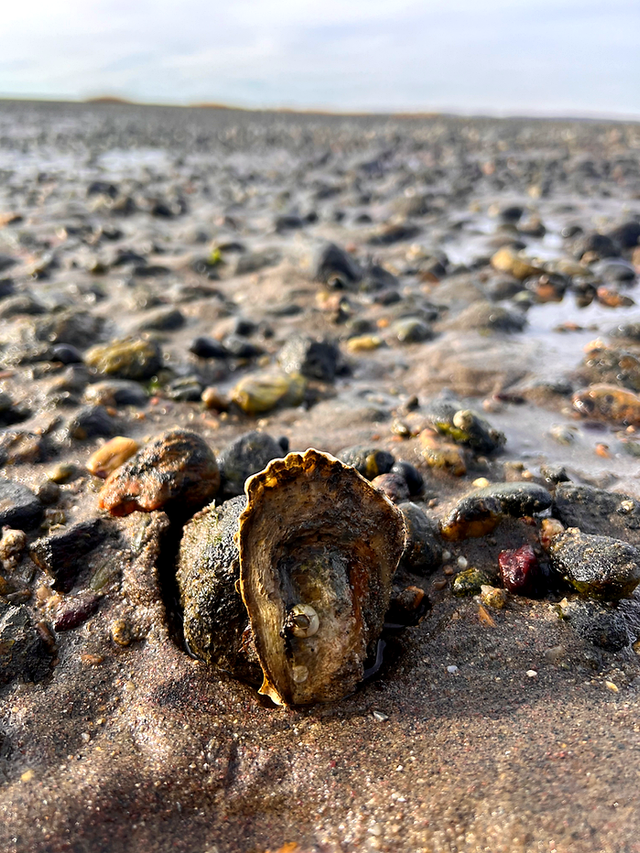
Very few naturally occurring oyster reefs remain in Long Island Sound. We're working to change that. We collect shell from restaurants across southeastern Connecticut, and are working with our partners to deploy reef structures that provide habitat for a wide range of marine species. A healthy reef doesn't just support one species, it cleans the water for everything else.
Eelgrass & Marsh Conservation
Eelgrass was once so common in these waters that people harvested it for insulation. It was even packed into the walls of Radio City Music Hall. Today, 90% of Long Island Sound's eelgrass is gone, wiped out by disease in the 1930s and kept from recovering by nitrogen pollution. We fund research, support replanting projects, and work with marine ecologists to bring these meadows back.
Water Quality & Nutrient Reduction
Excess nitrogen from upstream runoff feeds algae blooms that cloud the water and choke out marine life. In the early 1990s, a third of Long Island Sound was basically a dead zone. It's gotten better — billions in infrastructure investment have cut nitrogen loads significantly — but the work isn't done. We build and deploy ribbed mussel rafts that pull nitrogen directly out of the water, letting the estuary's own biology do the heavy lifting.
Science & Education
We fund fellowships for graduate students in marine ecology, participate in community science programs, and work with local schools to connect the next generation to the water. Conservation that lasts has to be rooted in understanding, not just what the estuary needs, but why it matters to the people who live here.
Our Vision
A Connecticut River mouth where the water runs clear, the ecosystem thrives, the eelgrass grows back, and the next generation of kids can grow up on these shores the way we did.
Who We Are
Board of Directors

Nick Richardson
Co-Founder
Nick grew up on the Old Lyme shoreline, spending countless hours exploring the estuaries of the Connecticut River delta. He holds a degree in Mechanical Engineering and Physical Computing from Carnegie Mellon University and works as a robotics engineer.

Sam Schavoir
Co-Founder
Sam grew up on the Connecticut shoreline with a background in business management and sustainable governance. He holds a B.A. in Political Science from Colorado College and an M.A. in Law and Diplomacy from Tufts University.

Peter McKillop
Board Member
Peter has been living and coming to the mouth of the Connecticut River for more than 65 years. A lifelong ecologist, journalist, writer, and nature enthusiast, he is a graduate of Wesleyan University.

Liddy Karter
Board Member
Liddy grew up in Old Lyme and lives on the mouth of the Connecticut River. An entrepreneur and ecologist, she serves on the nonprofit board of the Center for Business and the Environment at Yale. She holds an MBA from Yale and a B.A. from Columbia.
Team Members
Anthony Daniels
Team Member
Anthony grew up on the Connecticut shoreline with deep roots in the natural landscapes of southern New England. He holds a B.S. in Environmental Science and has worked in environmental consulting and insurance. A wooden boat builder and former Chair of the Old Lyme Conservation Commission, he brings hands-on know-how and civic experience to the Foundation's work protecting Long Island Sound and the Connecticut River estuary.

Fred Fenton
Team Member
Fred lives on the edge of a tidal marsh in Old Lyme. Recently retired from a 25-year career in Emergency Medicine, he currently serves on the Shellfish Commission of Old Lyme and is a past board member of the Old Lyme Land Trust.

Alec Goodrich
Development Chair
Alec grew up on the Connecticut River in Essex. A lifelong sailor and outdoors enthusiast, he is passionate about conserving the waterways he explored since childhood. He holds a B.A. from Tufts University and a J.D. from the George Washington University Law School.
Liam Tresnan
Secretary
Liam is a longtime resident of the area and teaches history and languages at the Williams School in New London. He is a graduate of Johns Hopkins University.
Our Partners
We don't work alone. Our projects happen alongside the scientists and conservation groups who know this estuary best.
- Connecticut Audubon Society
- Roger Tory Peterson Estuary Center
- Connecticut National Estuarine Research Reserve (NERR)
- The Nature Conservancy
- UConn Department of Marine Sciences
- Old Lyme Shellfish Commission